
“Quo Vadis Nicaragua? Civic Space Restrictions, Human Rights, and Democracy”
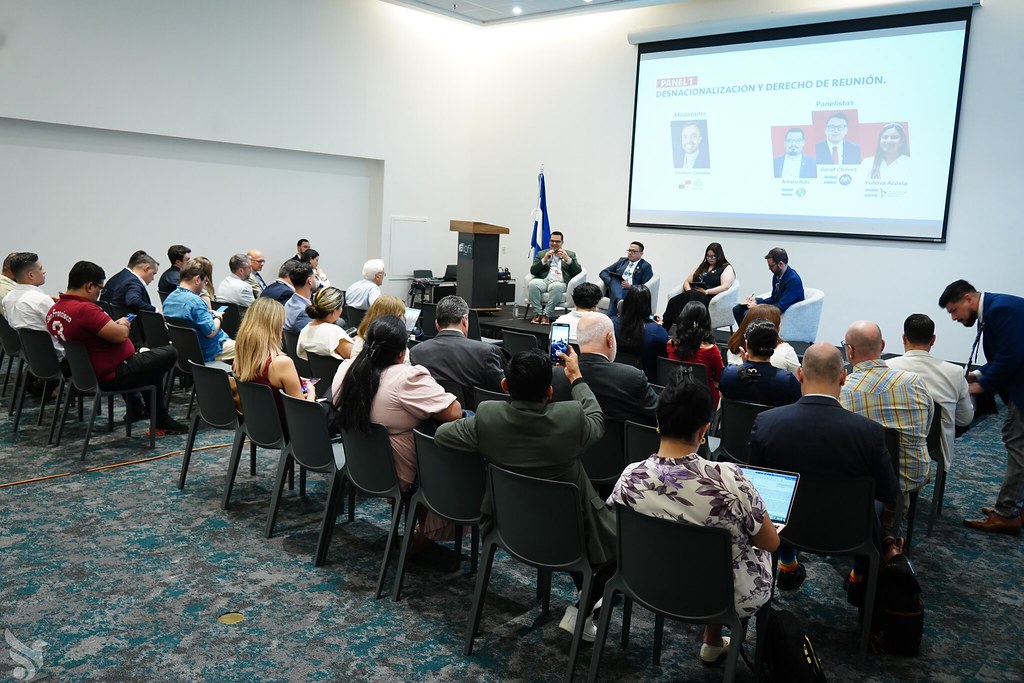
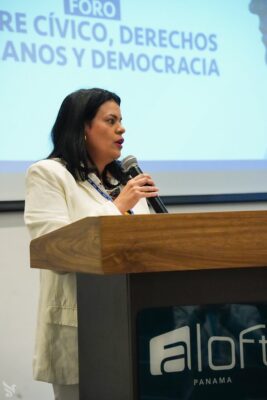
As part of the 56th Regular Session of the OAS General Assembly in Panama City, the Aloft Hotel hosted the forum “Quo Vadis Nicaragua? Civic Space Closure, Human Rights, and Democracy” on June 23, 2026. Organized by the Institute for Peace and Development (IPADES), the Nicaragua Freedom Foundation, and the Latin American and Caribbean Network for Democracy (REDLAD), the event brought together more than 50 social leaders, journalists, human rights advocates, and international experts.
The forum’s main objective was to examine the deep human rights crisis in Nicaragua, focusing on the impact of arbitrary denationalization, the erosion of the right to freedom of association, and the ongoing closure of civic space. The discussions also assessed the implications of this repressive model for the rule of law and the democratic future of the region.
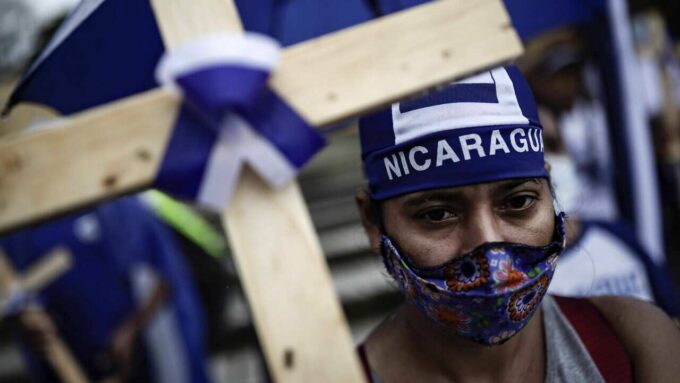
The event responded to the continuing evolution of repression in Nicaragua following the events of 2018, a period during which the regime shifted toward a model of severe political control and the widespread dismantling of fundamental freedoms. Among the key issues highlighted was the forced dissolution of between 3,390 and more than 5,600 civil society organizations, out of an original total of 7,227 registered entities. In the face of this policy of civic dispossession, transnational persecution, and forced exile, the forum posed an urgent strategic question: where is the country heading, and what kind of international response is needed to halt a repressive model that is eroding the social fabric?
The forum was strategically held alongside the sessions of the 56th OAS General Assembly in Panama. This timing significantly enhanced its impact, as on June 23 the General Assembly adopted a declaration on Nicaragua condemning systematic human rights violations and identifying acts that could constitute prima facie crimes against humanity. In this context, the event served as a vital bridge between the multilateral diplomacy of member states and the testimonial and legal evidence presented by Nicaraguan victims, journalists, and human rights defenders.
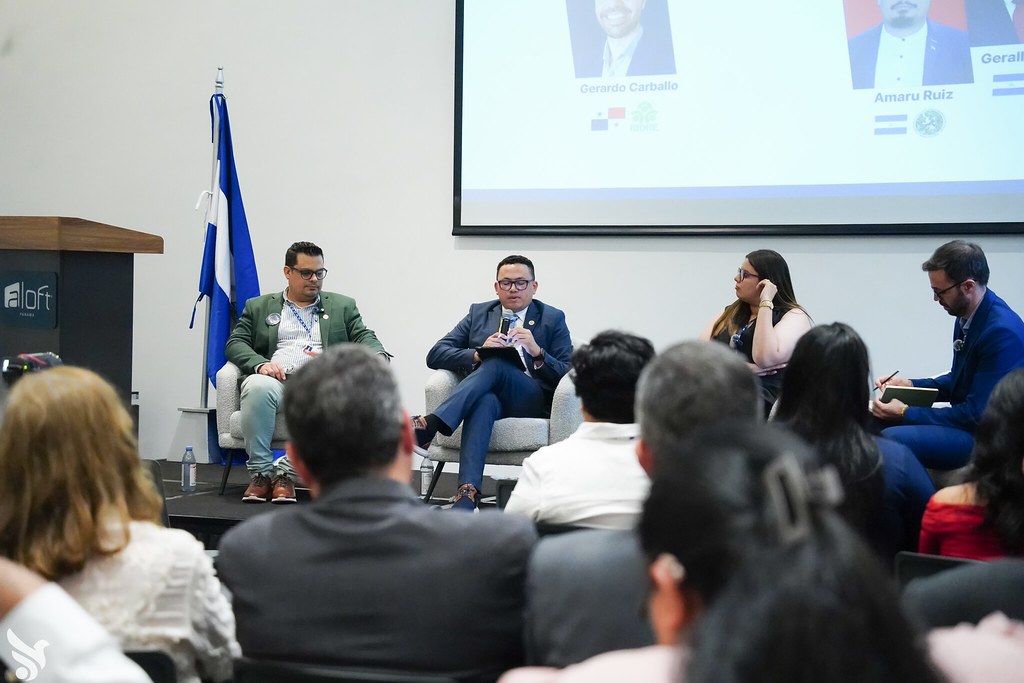
To address this crisis from both a technical and testimonial perspective, the forum structured its discussions around two specialized panels. Through these sessions, panelists and international guests examined both the dismantling of Nicaragua’s civic fabric and the operational responses available through international human rights protection mechanisms.
Panel 1: Denationalization, Freedom of Assembly, and Freedom of Association.
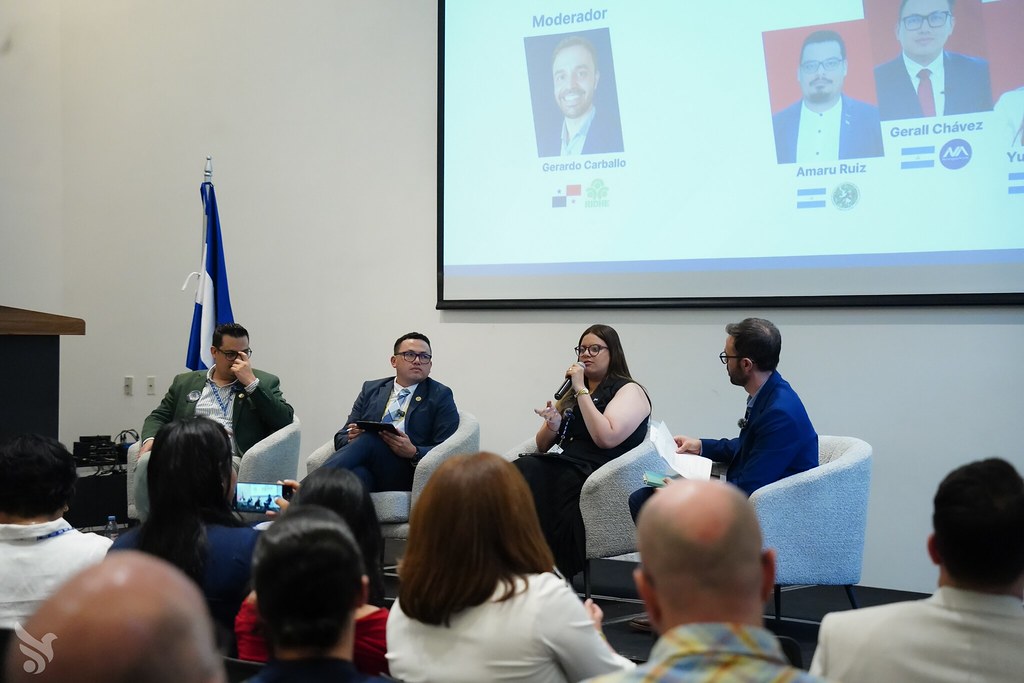
The first panel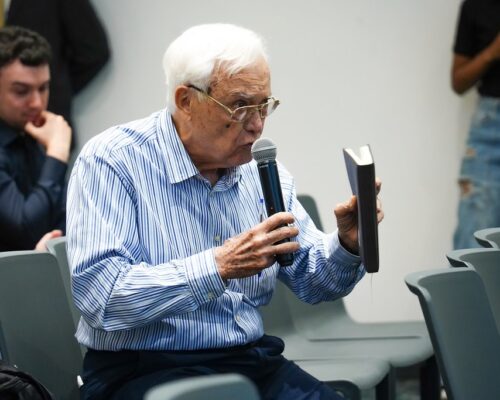 examined denationalization as a tool of political punishment and the revocation of legal status from civil society organizations. During the discussion, experts such as Amaru Ruiz emphasized that dismantling organizations not only eliminates legal structures but also destroys community networks and leaves vulnerable populations without support. Journalist Gerall Chávez highlighted how independent journalism has become an act of resistance carried out from exile, while Yunova Acosta underscored how young people have transformed fear into active organization and civic engagement within the diaspora.
Panel 2: International Human Rights System and the Role of Jan-Michael Simon (Part I)
The second panel examined the civic crisis through the lens of international human rights standards, featuring the special participation of Jan-Michael Simon, Chair of the United Nations Group of Human Rights Experts on Nicaragua (GHREN). Simon contributed the technical rigor of GHREN’s investigations, whose mandate includes documenting abuses committed since 2018, identifying individual responsibilities, and preserving evidence essential for future accountability processes. His analysis highlighted patterns of transnational repression and the state structures deployed by the regime.
Panel 2: Interinstitutional Synergy and Coordination of Mechanisms (Part II)
 The strategic value of this panel was reinforced by a high-level parallel meeting between the GHREN and the Inter-American Commission on Human Rights (IACHR). During this dialogue, participants prioritized discussion of the concrete challenges involved in ending state repression and restoring the rule of law, defining the technical and institutional role that each body should assume in this process. In terms of substance, this coordination made it possible to connect the United Nations’ evidentiary findings regarding transnational repression, the identification of state repressive structures, and the attribution of individual responsibilities with the Inter-American system’s capacity for monitoring, protective measures, and diplomatic pressure. In this way, the forum directly and tangibly linked civil society demands with the operational actions of the international community.
A key pillar of the forum was the recognition of Nicaraguan youth as a political force for democratic transformation, rather than merely as victims of exile and persecution. The participation of leaders such as Yunova Acosta, board member of JuventudLAC, highlighted how younger generations have transformed displacement and family separation into networks for digital advocacy and transnational organization. This perspective reaffirmed that the process of institutional reconstruction and the defense of human rights require active generational engagement across the continent.
The attendance of more than 50 participants reflected the forum’s legitimacy and convening power. The methodology fostered a pluralistic dialogue that brought together Nicaraguan political and social actors, human rights activists, independent journalists, youth networks, and international experts. This diversity, supported by the organizational alliance between IPADES, Fundación Libertad Nicaragua, and REDLAD, made it possible to integrate grassroots perspectives, rigorous legal analysis, and collective advocacy strategies.
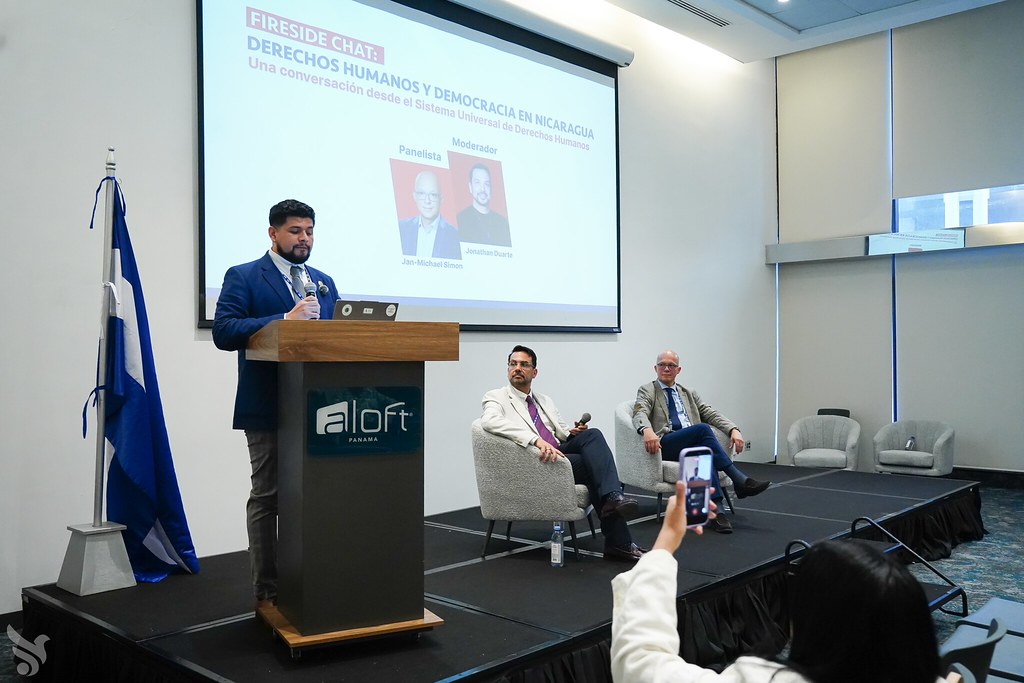
Relive the discussions and presentations delivered by the experts through the full recording of the forum hosted by IPADES on its YouTube channel. Click here to watch.
Media Coverage of the Event: La mesa redonda-Jóvenes líderes , La mesa redonda-denuncia cierre civico ,Destino panamá-situación de exiliados , Telemetro-poder 22 de junio , artículo66-derechos humanos , Laprensani-organizaciones opositoras