
|
Getting your Trinity Audio player ready...
|
Although China’s fixation with Taiwan dates back to 1949, after the Chinese Civil War between the communists led by Mao Zedong and the nationalists of the Kuomintang led by Chiang Kai-shek—when the communists were victorious and the nationalists went into exile and took refuge on the island formerly known as Formosa (Taiwan)—this ambition has intensified over time.
In recent years, it has grown exponentially, with Chinese pressure showing no signs of easing. This includes the constant and persistent dispatch of fighter jets, bombers, and drones near Taiwan’s airspace, as well as warships and numerous military exercises off the shores of the island—all with the simple objective of intimidating, monitoring, and wearing down Taiwan’s defenses.
China’s “dirty war” is not limited to military maneuvers and diplomatic blockades. In this digital era, it has also carried out relentless cyberattacks against hospitals, banks, energy networks, and Taiwanese state institutions.
China’s ambitions are mainly driven by three factors:
- It has always viewed Taiwan as a “rebellious province” and seeks to uphold the “One China” policy.
- It aims to take full control of the island and the Taiwan Strait.
- It seeks to seize the critical and indispensable semiconductor and chip industry, which is the most advanced on the planet.
Xi Jinping has repeatedly threatened to “reunify China” in a forceful manner, and has set 2049 as the deadline—the year marking the 100th anniversary of the founding of the People’s Republic of China, commemorating that decisive moment in 1949 when Mao Zedong proclaimed the new communist state in Tiananmen Square, consolidating control over mainland China.
Over time, Taiwan has developed its own identity. Its people no longer identify themselves as Chinese but as Taiwanese, moving beyond the historical dispute over which entity represents the “real China”—the Republic of China or the People’s Republic of China.
For years, China has attempted to diplomatically isolate Taiwan, leveraging its exponential growth and regional hegemony over the past 30 years. It blocks Taiwan’s entry into international organizations, pressures countries to sever ties with Taipei, and opposes and threatens any diplomatic recognition of the island.
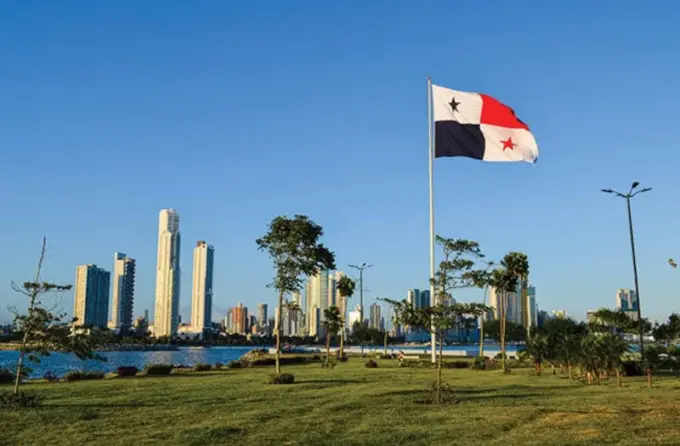
Taiwan has maintained an important diplomatic presence in Latin America—perhaps not as extensive as it would wish, but still significant given its circumstances. This relationship has also been valuable for the countries involved. Currently, Paraguay and Guatemala recognize Taiwan, but until a few years ago there were more. Due to ongoing pressure from China, several countries have shifted recognition, including Panama (2017), El Salvador and the Dominican Republic (2018), Nicaragua (2021), and Honduras (2023). Many of these nations received substantial aid from Taiwan, such as medical equipment, ambulances, investments in hospitals, educational scholarships, and agricultural technology, among others.
Today, only 12 countries recognize Taiwan due to Chinese pressure. However, most of the world continues to trade with Taiwan because of its strategic importance, with major powers being especially interested.
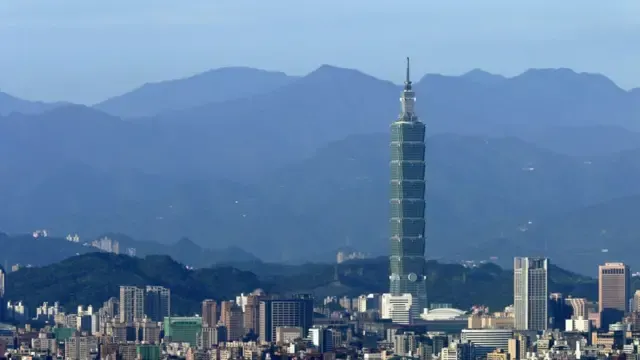
Taiwan’s importance to the world must not be overlooked. The island is the largest producer of advanced chips on the planet, manufacturing more than 90% of them and producing around 60% of global semiconductors, making it a strategic and reliable supplier—something that would likely not be the case if China controlled such a crucial industry.
The world must remain vigilant in the face of China’s ongoing threats against Taiwan’s sovereignty and territorial integrity. Under no circumstances should China be allowed to take control of Taiwan, not only for regional peace in Asia but also for global stability. It is here that the United States and Japan must uphold their commitments and act as guarantors of Taiwan’s survival.
This article is dedicated to the Chen family, who have been, are, and will always be my family.
By: Adolfo Cortezao Oquero